
What file formats do printed circuit boards manufacturers require?
printed circuit boards manufacturers require
When designing a printed circuit board (PCB), one of the key considerations is the file format required by printed circuit boards manufacturers. The file format plays a crucial role in ensuring that the design is accurately interpreted and translated into a physical PCB. Since PCB manufacturing involves precise processes and a wide range of technical specifications, it is essential for designers to submit files that can be easily understood by the manufacturer’s software and production equipment.
The most common file format required by printed circuit boards manufacturers is Gerber. Gerber files are used to communicate the intricate details of a PCB design, such as the copper layers, solder mask, silkscreen, and drill holes. These files contain all the necessary information to create the layers and components of the PCB during fabrication. The Gerber format is widely accepted by most PCB manufacturers because it is a well-established industry standard and is compatible with the software and machines used in the production process. Gerber files are typically accompanied by an additional file called the “excellon” file, which provides the information necessary for drilling the holes in the PCB.
In addition to Gerber files, printed circuit boards manufacturers often require Bill of Materials (BOM) files. The BOM is a detailed list of all the components used in the PCB design, including resistors, capacitors, transistors, and connectors. This file provides information about the component type, values, specifications, and part numbers, which are essential for the assembly process. The BOM ensures that the manufacturer has all the correct parts to assemble the PCB and that the components are properly placed during assembly.
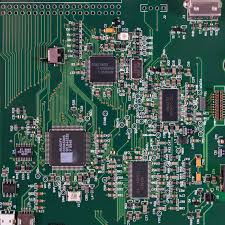
What file formats do printed circuit boards manufacturers require?
Another important file format for printed circuit boards manufacturers is the ODB++ format. This is an advanced file format that integrates all aspects of the PCB design into a single file, including the Gerber data, BOM, netlist, drill data, and assembly instructions. ODB++ is favored by some manufacturers for its ability to streamline the manufacturing process by providing all the information in a unified format. This can reduce the chances of miscommunication and errors between the designer and the manufacturer, as all the data is included in one package.
For more complex designs, manufacturers may also require a netlist file. The netlist contains a list of all the electrical connections between the components on the PCB, helping the manufacturer verify that the design is electrically correct. It is a critical part of the verification process, as it ensures that all the components are properly connected and there are no potential issues with the electrical routing. The netlist can be provided in a variety of formats, with the most common being the IPC-2581 format, which is compatible with many PCB design software tools.
Some printed circuit boards manufacturers also request 3D models of the PCB design. These models can be provided in formats such as STEP or IGES, which are used to represent the physical shape and dimensions of the PCB. 3D models are especially helpful when designing complex PCBs or enclosures, as they allow manufacturers to visualize the final product and assess how the board will fit within the overall device.
In conclusion, printed circuit boards manufacturers require several key file formats to ensure that a PCB design is accurately and efficiently translated into a physical product. The most common formats include Gerber files, Bill of Materials (BOM), ODB++, netlist files, and 3D models. Each of these file formats plays a specific role in the manufacturing process, ensuring that the design is correctly interpreted, the components are properly assembled, and the final PCB meets the required specifications. By providing the correct file formats, designers can help ensure a smooth transition from design to production, minimizing the risk of errors and delays in the manufacturing process.