
The Role of Blockchain in the Carbon Credit Market
Blockchain in the Carbon Credit Market
The voluntary carbon market (VCM) is plagued with a lack of credibility, resulting in buyer distrust and low-integrity emissions reduction claims. To remedy this, many have turned to blockchain technologies, which promise to bring a standardized accounting system to carbon markets.
Blockchain is a technology that records data in digitized blocks, creating a record of the transaction on a secure network. It is also a digital platform that can integrate multiple data systems and link them together in a public ledger. These capabilities make it an ideal tool to create a meta-registry for carbon credits, linking multiple streams of metadata into a single database.
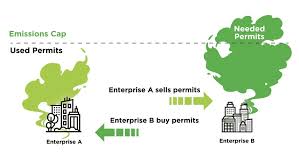
While the carbon credit market is a new frontier for blockchain, several companies are already working on solutions. One company, Toucan, has created a bridging protocol that turns real carbon credits into tokens that can be traded on the blockchain. This allows them to bypass the VCM’s rigid requirements and sell credits directly to buyers. However, this approach has raised concerns that the fungibility of tokenized credits could allow bad actors to make misleading offsetting claims and misappropriate carbon credits.
The Role of Blockchain in the Carbon Credit Market
Toucan is attempting to address these fears by using blockchain to separate carbon credits into different types with varying levels of integrity. They are also establishing a carbon pool of tokenized credits to ensure that the highest quality credits get into the hands of buyers. They are also developing a way to add carbon credit data into the tokenized credits through oracles, ensuring that buyers have complete visibility into the emissions reduction claim and other information.
Adding this information to the blockchain would give every user the ability to independently verify a carbon credit’s authenticity and integrity. This could help increase the reliability of the carbon credit market and reduce the risk of fraud. Furthermore, it could enable the creation of new, innovative business models, such as a carbon credit pool that could offer buyers a range of options for their carbon reduction needs.
Another important advantage of the blockchain is its programmability. This allows for the design of workflows, integration of regulatory requirements, and other business logic to be programmed into a digital asset. This makes it a suitable tool to build the foundation for a new carbon economy, with the potential to scale across borders and sectors.
As the world struggles with climate change, it’s time to think beyond a limited and failing carbon market. With the right policies in place, the carbon credit market has an opportunity to transform into a powerful tool for building a new generation of clean energy technologies. But this requires the support of governments and stakeholders to overcome barriers to progress. It is only with their help that the full potential of this powerful tool can be realized. The global community must take action now to secure the future of our planet.