
How High Density Interconnect Can Be Used in Medical Devices
How High Density Interconnect Can Be Used
When a minimally-invasive medical device makes contact with the walls of the heart and sends microvolt electrical signals, that connection enables life-impacting decisions. And that connection requires multiple interconnect solutions: a connector with the pins to transfer those signals, a circuit board with the circuitry to process them and transmit the results, wires with a specific design to carry those signals, a distal tip that makes contact and delivers therapy, and a plastic housing that protects everything.
This is where high density interconnect can make a difference. The higher component density and smaller traces of HDI PCBs result in less weight, better performance, reduced heat generation and lower power consumption. They are also easier to manufacture and can be fabricated with tighter tolerances. They can even accommodate impedance-controlled traces with the right routing software, ensuring that you satisfy your manufacturer’s DFM requirements.
The technology is found in advanced electronic medical devices like implanted pacemakers, electrostimulation and modulation (EMM) devices, neurostimulation and stimulation devices and other non-invasive medical devices. But they are also used in consumer electronics products such as mobile cellular phones, touch-screen devices, laptop computers, digital cameras, 4G network communications and military applications such as avionics and smart munitions.
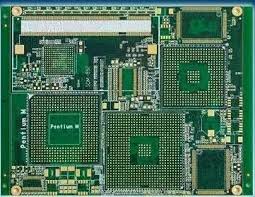
How High Density Interconnect Can Be Used in Medical Devices
In the case of medical implants and medical PCBs, high-density interconnect helps to improve a medical device’s durability by enabling it to be a compact, lightweight device. It also enables it to achieve a greater number of mating cycles – and meet stringent qualification testing requirements for medical devices.
It’s also used in industrial automation, where the need for computerization and IoT technology is critical to boosting productivity. In these environments, the right IoT devices can help track inventory and performance, relay data to other devices and systems, and help improve overall safety and efficiency. In some cases, these devices are even capable of detecting problems before they become more serious.
For these applications, a high-density interconnect solution like Smiths Interconnect’s D04 connector is ideal. The 82-contact, single row connector supports high mating cycle counts while maintaining superior reliability and performance in challenging environments. It features touch-proof design for safe handling, an ergonomic layout for easy mating and demating, and rigorous qualification testing.
The success of medical and industrial devices depends on the accuracy of their signal transmission and processing, and their ability to perform as intended for a given purpose. High-density interconnect can make these devices more efficient, lighter and smaller than they otherwise would be, which could translate into a happier, healthier world. That’s something that we all deserve.