
How Flexible PCBs Can Be Used in Consumer Electronics
Flexible PCBs Can Be Used in Consumer Electronics
When it comes to making compact, portable electronic devices, engineers are challenged with the need for reliable connections that can adapt to the device’s shape. Often, these demands can’t be met by traditional rigid PCBs that use wire harnesses to connect components. This is where flex circuits come in handy, offering reliability and durability that wired systems can’t match.
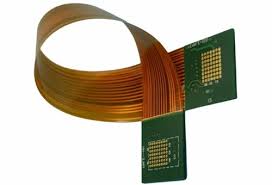
Flex circuits have the ability to bend, twist and reposition themselves, giving them the flexibility necessary for many applications. They can also absorb vibrations and shocks, reducing the impact on the PCB itself as well as solder joints and other interconnections. In addition, flex circuits can save up to 60% of space and weight when compared to traditional rigid boards and wire harnesses.
These flexible circuits are ideal for curved, foldable and twisted electronic devices like curved screens on smartphones and tablets. They can also be sewn into garments to serve as elastic bands for wearable electronics like fitness trackers.
Unlike rigid PCBs, which are constructed from a composite of woven fiberglass impregnated with epoxy resin, flex circuit pcb are made from polyimide, a plastic material that is more flexible than glass. This material offers superior thermal properties and has a very low coefficient of expansion, making it suitable for harsh environments. It also has excellent resistance to chemical and radiation damage.
How Flexible PCBs Can Be Used in Consumer Electronics
The most common material choice for a flex PCB is an ultra-thin layer of polyimide known as a flex substrate. A thin layer of rolled annealed copper is laminated on top of the flex substrate. Copper is the conductor that carries signals through the PCB. It is patterned using lithographic processes to create the desired conductive paths or traces. The thickness of the foil is critical for flex circuits, and it is typically chosen based on current carrying requirements. A thicker foil can be used to reduce the likelihood of bending fatigue, but it will increase the cost.
Manufacturers also use a coverlay film created with PI to provide protection for the flex circuit. Depending on the application, these films can be produced with one or both sides coated for electrical protection. The coverlay is also used to shield the conductive patterns from environmental contaminants, which can be an important consideration for some flex circuit applications.
To further improve the quality of a flex circuit, manufacturers can use an adhesiveless base material to heighten flexibility. Alternatively, they can apply an adhesive to the copper and underlying flex substrate. However, this method can reduce the PCB’s reliability because the adhesive can fail over time. In order to avoid these problems, manufacturers can use a hatched copper instead of solid copper, which allows the conductor pattern to be more resistant to bended stresses. A larger radius can also decrease the chances of bending stress breaking the circuit. To ensure the PCB’s durability, they can include a stress test that mimics the conditions in which it will be operated. This will help to identify areas that require additional strength or reinforcement, which can be accomplished by adding a stiffener to the flex.