
Do I Need an Instructor to Use the Reformer Pilates Machine?
Instructor to Use the Reformer Pilates Machine
While you can certainly do Pilates workouts at home, we recommend sticking to beginner classes or private sessions until you feel confident in your abilities. A professional instructor can ensure you are using the equipment correctly and safely, as well as offer guidance and support if necessary.
A best reformer pilates machine is a versatile piece of exercise equipment used to enhance strength, flexibility, coordination, and balance. It consists of a frame with a sliding carriage, springs for resistance, and ropes. This equipment can be used to target multiple muscle groups at once, and is particularly beneficial for sculpting the core, arms, legs, and glutes. The exercises are calming and gentle on the joints, making them suitable for all ages and fitness levels.
While Joseph Pilates envisioned his method to be holistic in nature, the Reformer is a key element in its progression. Its versatility enables instructors to tailor a class to meet the specific needs of their clients, from beginners to advanced movers. It also provides a more comprehensive workout than Pilates mats, working additional muscles throughout the body and incorporating more challenging movements.
With all that said, there are certain advanced Reformer moves that require a spotter to be safe and effective. Splits and headstands, for example, should only be attempted in a studio with the supervision of a trained instructor who can help you maintain proper form and technique.
Whether you are an expert runner looking for a low-impact, full-body workout, or someone recovering from a back injury, the reformer can be a total game changer. The machine offers a dynamic range of exercises that target all major muscle groups, and its versatile set of tools allows instructors to increase the tension to focus on specific areas.
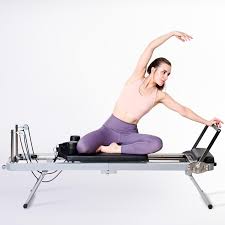
Do I Need an Instructor to Use the Reformer Pilates Machine?
The basic Reformer setup includes a carriage, platforms, springs, and ropes. Some studios may also have other accessories, such as a footbar or a sitting box, to increase the challenge of certain exercises.
Most instructors will have a brief explanation of the various parts and pieces of equipment before getting started in class. Make sure you wear comfortable, breathable clothing that will allow you to move freely. Loose or baggy clothes can obstruct your movement and hinder your ability to monitor your posture and alignment.
Once you’re on the platform, you’ll notice a long pair of straps or loops resting on metal pegs, and your instructor will tell you which of these to use during different exercises. The longer straps can be used to create heavier resistance and the shorter ones are more suitable for lower-body or abs-focused exercises.
Some classes may use a padded headrest, which has 3 settings – all the way up, halfway up, and all the way down. You’ll want to position this according to your height and preferences, but it’s also important that the headrest is secure so it doesn’t fall off during class. The headrest is usually placed right above the shoulder blocks. The padded blocks will serve as a cushion for your shoulders as you move the carriage and can be used to help with posture and alignment.