
Can pcb circuit board assembly be used in RF/microwave applications?
Can pcb circuit board assembly be used
PCB (Printed Circuit Board) circuit board assembly is not only suitable but also widely used in RF (Radio Frequency) and microwave applications, showcasing its versatility and adaptability across diverse electronic systems. RF and microwave circuits operate at high frequencies, typically ranging from hundreds of megahertz to several gigahertz, and require precise signal integrity, impedance matching, and low-loss transmission paths. PCB assembly techniques have evolved to meet the stringent requirements of RF and microwave applications, making them an integral part of communication systems, radar systems, satellite equipment, and other RF/microwave devices.
One of the key advantages of using PCB circuit board assembly in RF/microwave applications is its ability to support complex circuit designs and high-frequency signals. PCBs provide a controlled environment for routing signals, enabling designers to implement intricate RF/microwave circuits with precise trace widths, spacing, and impedance matching. Advanced CAD (Computer-Aided Design) software and manufacturing techniques allow for the optimization of PCB layouts to minimize signal loss, crosstalk, and electromagnetic interference (EMI), ensuring the integrity and performance of RF/microwave circuits.
Moreover, pcb circuit board assembly techniques can be tailored to meet the specific requirements of RF/microwave applications, such as impedance-controlled routing, microstrip or stripline transmission lines, and low-loss dielectric materials. Impedance-controlled routing ensures consistent signal impedance throughout the PCB, minimizing reflections and signal distortion in high-frequency circuits. Microstrip and stripline transmission lines provide low-loss transmission paths for RF/microwave signals, allowing for efficient signal propagation with minimal attenuation. Specialized dielectric materials, such as Rogers and Teflon-based substrates, offer high electrical performance and stability over a wide range of frequencies, making them ideal for RF/microwave applications.
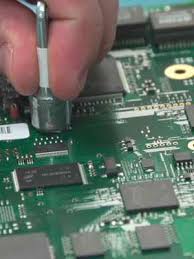
Can pcb circuit board assembly be used in RF/microwave applications?
Furthermore, PCB circuit board assembly enables the integration of RF/microwave components, such as amplifiers, filters, antennas, and mixers, into compact and efficient layouts. Surface-mount technology (SMT) allows for the placement of miniature components with high precision, reducing parasitic effects and enhancing circuit performance. Through-hole components can also be used in RF/microwave PCB assemblies, although careful attention must be paid to minimize lead inductance and parasitic capacitance.
Another advantage of using PCB circuit board assembly in RF/microwave applications is its scalability and cost-effectiveness. PCBs can be manufactured in large quantities using standardized processes, resulting in economies of scale that drive down production costs per unit. Additionally, PCB assembly techniques, such as automated pick-and-place machines and reflow soldering, enable high-throughput production with minimal labor costs, making PCBs a cost-effective solution for RF/microwave systems.
Despite these advantages, designing and manufacturing PCBs for RF/microwave applications require careful consideration of various factors, including substrate material selection, trace impedance matching, and electromagnetic compatibility (EMC) considerations. Additionally, proper grounding, shielding, and layout optimization are crucial to minimize signal interference and maintain signal integrity in RF/microwave circuits.
In conclusion, PCB circuit board assembly is well-suited for RF/microwave applications, offering precise signal routing, impedance control, component integration, and cost-effective production. From communication systems and radar equipment to satellite transceivers and wireless devices, PCBs play a critical role in enabling high-performance RF/microwave systems that drive innovation and connectivity in today’s interconnected world. As technology continues to advance, PCB assembly techniques will continue to evolve to meet the evolving demands of RF/microwave applications, further expanding their capabilities and applications in the field.