
Advantages of Using No-Clean Flux in PCB Manufacturing Assemblies
Using No-Clean Flux in PCB Manufacturing Assemblies
A soldering flux is a chemical mixture that is added to a copper surface prior to soldering, helping the metal and the flux bond. Traditionally, water-soluble soldering fluxes have been the standard in the industry. However, recent advancements in technology have led to no-clean flux formulations that offer a number of advantages over traditional water-soluble fluxes for PCB assembly.
In general, no-clean fluxes have a lower cost than water-soluble fluxes because they do not require the extra cleaning steps required with water-based solutions. Additionally, no-clean fluxes can be used for through hole and surface mount technology (SMT) applications without the reflow oven requirement of water-soluble fluxes.
Assemblers started using no-clean flux because of problems found during in-circuit testing (ICT). Earlier no-clean pastes left tacky residues on boards after reflow and test pins did not always penetrate the pcb manufacturing assembly to make good contact with the test pads. These issues resulted in failures at the device level that were expensive for assemblers and customers. Today, no-clean fluxes are formulated to eliminate these problems.
While the chemistry of no-clean fluxes varies between manufacturers, all no-clean formulations contain a vehicle that carries the active and inactive ingredients that are mixed to form the flux core. The vehicle is either rosin or a resin. Some no-clean fluxes have a low halide content making them cleaner than others.
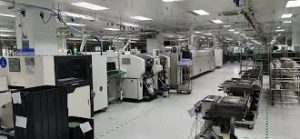
Advantages of Using No-Clean Flux in PCB Manufacturing Assemblies
No-clean fluxes are processed differently than water-soluble fluxes. Unlike water-soluble fluxes that are defluxed in an aqueous solution, no-clean fluxes are cleaned using a solvent or a solution of saponifier and water. This requires additional equipment, higher wash temperatures and longer washing cycles. Assemblers must also ensure the cleaning solution is compatible with the specific no-clean flux chemistry they are using and that it is able to dissolve all of the dissolved components.
Using no-clean processing can result in more reliable products because there is less risk of failure due to unclean components or improperly washed residues. However, this type of process is not ideal for all situations. For example, some conformal coating and potting materials are not compatible with no-clean residues and may react or separate from the substrate. This can affect adhesion and lead to premature product failure. Comprehensive removal of the no-clean residue prior to applying a conformal coating or potting material can help prevent this issue.
Another disadvantage of no-clean processing is that it can be difficult to remove all of the residual no-clean residue from a board even with proper reflow and wash procedures. This can be especially challenging for QFN and LGA packages, which have very low standoff heights. The heat of reflow soldering normally causes the no-clean residue to evaporate, but there are limited venting spaces beneath these packages which can make it difficult for the residual flux to reach its benign glassy state (BGS) under low standoff components.