
What is a printed circuit board manufacturers?
printed circuit board manufacturers
In the intricate world of electronics, where innovation races ahead at a breakneck pace, printed circuit boards (PCBs) stand as the unsung heroes, enabling the functionality of countless devices we rely on daily. At the heart of this ecosystem lie PCB manufacturers, the architects who bring these vital components to life.
At its core, a printed circuit board manufacturers is a flat, insulating board upon which electronic components are mounted and connected through conductive pathways etched from copper sheets. PCB manufacturers play a pivotal role in the production process, from designing the layout of the board to fabricating it with precision.
The journey of a PCB begins with design. Manufacturers work closely with engineers to translate schematic diagrams into physical layouts, optimizing for factors like space efficiency, signal integrity, and thermal management. Advanced software tools aid in this process, allowing for intricate designs that meet the demands of modern electronics.
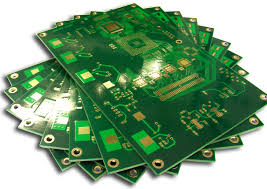
What is a printed circuit board manufacturers?
Once the design is finalized, the manufacturing process begins. This typically involves a series of steps, starting with substrate preparation. The substrate, often made of fiberglass-reinforced epoxy laminate, serves as the base material for the PCB. Manufacturers carefully select substrates based on factors like rigidity, thermal conductivity, and cost-effectiveness.
Next comes the crucial step of etching. Using specialized equipment, manufacturers selectively remove copper from the substrate to create the desired circuit pattern. This process demands precision and attention to detail, as any errors can compromise the functionality of the final product.
After etching, the board undergoes a series of additional processes, including drilling, plating, and solder masking. These steps further refine the board, preparing it to receive electronic components. Throughout this stage, manufacturers adhere to strict quality control measures to ensure consistency and reliability.
With the board prepared, the assembly process begins. This involves soldering electronic components onto the board, a task often performed using automated machinery for efficiency and accuracy. Skilled technicians oversee this phase, verifying component placement and solder connections to guarantee functionality.
Once assembly is complete, the finished PCB undergoes rigorous testing to validate its performance. Manufacturers utilize various testing methods, including automated optical inspection and functional testing, to identify any defects or abnormalities. This meticulous approach ensures that only high-quality PCBs reach the market.
Beyond the production process, PCB manufacturers play a crucial role in driving innovation within the industry. By staying abreast of emerging technologies and market trends, manufacturers continuously refine their processes and capabilities, pushing the boundaries of what’s possible in electronic design.
Moreover, PCB manufacturers serve as key partners for companies across a wide range of industries, from consumer electronics to aerospace and beyond. Their expertise and experience make them invaluable collaborators, helping businesses bring their products to market quickly and efficiently.
In conclusion, printed circuit board manufacturers are the backbone of the electronics industry, responsible for bringing to life the intricate components that power our modern world. Through expertise, innovation, and a commitment to quality, these manufacturers play a vital role in shaping the future of technology.